 Daysafe
New York Residency Audit
A New York residency audit asks one of two questions: did you really give up New York as your home (domicile), or did you keep a home there and spend 184 days or more in the state (statutory residency)? If you have a New York home, you must prove your day count, and any part of a day in New York counts as a full day. The standard is "clear and convincing" evidence, so the records you keep during the year decide the audit.
Keeping a home in New York? Check how close you are to 184 days with the 183-day rule calculator.
Two ways New York can tax you as a resident
New York's tax department says you're a New York State resident for income tax if either is true:
| Test | When you're a resident | What the audit looks at |
|---|---|---|
| Domicile | New York is your permanent home, the place you intend to return to after being away | Your life: home, business, family, belongings and time |
| Statutory residency | You keep a permanent place of abode in New York for substantially all of the year and spend 184 days or more in the state | Your calendar: every day you were in New York |
Residents pay New York tax on all their income, wherever it's earned. New York City uses the same two tests for its own income tax: a domicile in the city, or a permanent place of abode there plus 184 days in the city.
The 184-day rule: how New York counts days
New York writes the rule as "184 days or more," which is the same thing as "more than 183 days." Its regulation says presence in the state "for any part of a calendar day" is a day in New York. Its own audit guidelines spell out what that means in practice:
- Short visits count. Coming in for dinner or shopping and going home the same evening is a New York day. In one case a Connecticut couple who crossed the border to shop and dine on about 20 days a year lost on this point: there's "no shopping or dining exception."
- You don't have to sleep at your New York home. A day counts even if you never go to the apartment.
- Travel through the state doesn't count if it's only to board a plane, ship, train or bus to somewhere outside New York, or to keep going on a trip that started outside the state. Driving to JFK for a flight to Europe isn't a New York day; arriving a day early for a business meeting is.
- Days in a hospital don't count. By audit policy, time confined to a New York medical institution isn't a day in New York.
The day count only matters if you also have a "permanent place of abode" in New York: a home suitable for year-round use that you maintain, whether you own it or not. New York's highest court ruled in the Gaied case that you also need a "residential interest" in it: there must be "some basis to conclude that the dwelling was utilized as the taxpayer's residence." A home your spouse owns or leases usually counts. A vacation place that can't be used year-round doesn't.
"Substantially all of the year" generally means more than 10 months, under audit policy since tax year 2022 (before that, more than 11). So if you buy or sell your New York home during the year, the statutory test usually can't catch you that year.
Domicile: the five primary factors
A domicile audit asks whether you made a real change. New York's Nonresident Audit Guidelines tell auditors to look first at five primary factors, each comparing New York with your other location:
- Home: how you use and keep your New York home compared with your home elsewhere.
- Active business involvement: whether you still run or work in a New York business.
- Time: where you actually spend the year.
- Items "near and dear": heirlooms, art, collections, family photos and pets.
- Family connections: where your spouse and minor children live and go to school.
Only after these do auditors look at "other" factors, such as where your bills and bank statements arrive, where your car is registered and which state issued your driver license. The burden is on you to show a change of domicile with clear and convincing evidence; a new driver license alone won't do it. If you're moving to Florida, how to become a Florida resident covers the Florida side.
What the auditor asks for
For a statutory residency audit, the regulation requires anyone who keeps a New York home and claims to be a nonresident to "keep and have available … adequate records" proving they weren't in New York more than 183 days. The guidelines list what auditors may request:
- a diary or calendar of where you were each day;
- credit card statements and ATM receipts;
- phone bills and utility bills for both homes;
- flight itineraries, hotel receipts and E-ZPass records;
- office swipe-card records and business logs.
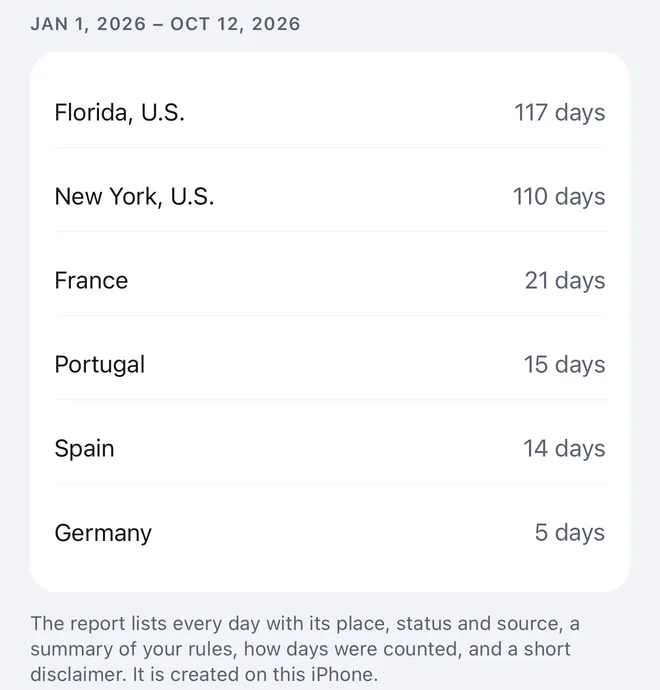
Tax tribunals have accepted "contemporaneously maintained diaries or calendars supported by credible testimony." A log rebuilt from memory during the audit is weaker. Records also work against you: if your New York phone shows calls on a day you say you were in Connecticut, that day goes to New York.
Domiciled in New York but living elsewhere
A New York domiciliary isn't taxed as a resident if they meet all three conditions in either group:
- Group A: no permanent place of abode in New York during the year, a permanent place of abode outside New York for the whole year, and 30 days or less in New York.
- Group B (the 548-day rule): at least 450 days in a foreign country during 548 consecutive days, with you, your spouse and minor children spending 90 days or less in New York in that period, plus a prorated limit for the partial years at each end.
Working remotely for a New York employer
Leaving New York doesn't end New York tax on your pay. If your primary office is in New York, New York treats your days working from home elsewhere as New York workdays, unless your employer has set up a bona fide employer office where you telecommute. You file as a nonresident and pay New York tax on that part of your wages.
Questions
How many days can I spend in New York without being a resident?
If you keep a home in New York, 183 days or fewer: 184 days makes you a statutory resident. If you have no New York home, the day test doesn't apply, but your days still count toward the domicile question.
Does a partial day count as a day in New York?
Yes. Any part of a day counts, even a short visit. The exceptions are travel through New York to a destination outside the state and time confined in a medical facility.
Who has to prove the day count?
You do. A taxpayer with a New York home must prove they spent fewer than 184 days in New York, with clear and convincing evidence, for each year under audit.
What records help in a New York residency audit?
A day-by-day diary or calendar kept during the year, backed by credit card, phone, travel and E-ZPass records. Auditors compare them, so they need to agree.
Are New York City residency rules different?
No. The city uses the same tests: domicile in the city, or a permanent place of abode there and 184 days or more in the city.
Is this tax advice?
No. Daysafe counts days and shows rules with their sources. If you're facing an audit, talk to a tax adviser who handles New York residency cases.
Keep the calendar a New York auditor asks for
Daysafe records which U.S. state you're in each day, counts any part of a day like New York does, and warns you before day 184. Export a day-by-day PDF or CSV for your tax adviser. No account; your days stay on your phone.
Sources
New York State Department of Taxation and Finance: Income tax definitions (domicile, resident, permanent place of abode, Groups A and B), FAQs on filing requirements, residency and telecommuting (New York City, telecommuting), Nonresident Audit Guidelines, December 2021 (primary factors, 10-month rule, day count, travel and medical days, records, Gaied, Klingenstein); 20 NYCRR §105.20. Checked on 25 November 2026.